
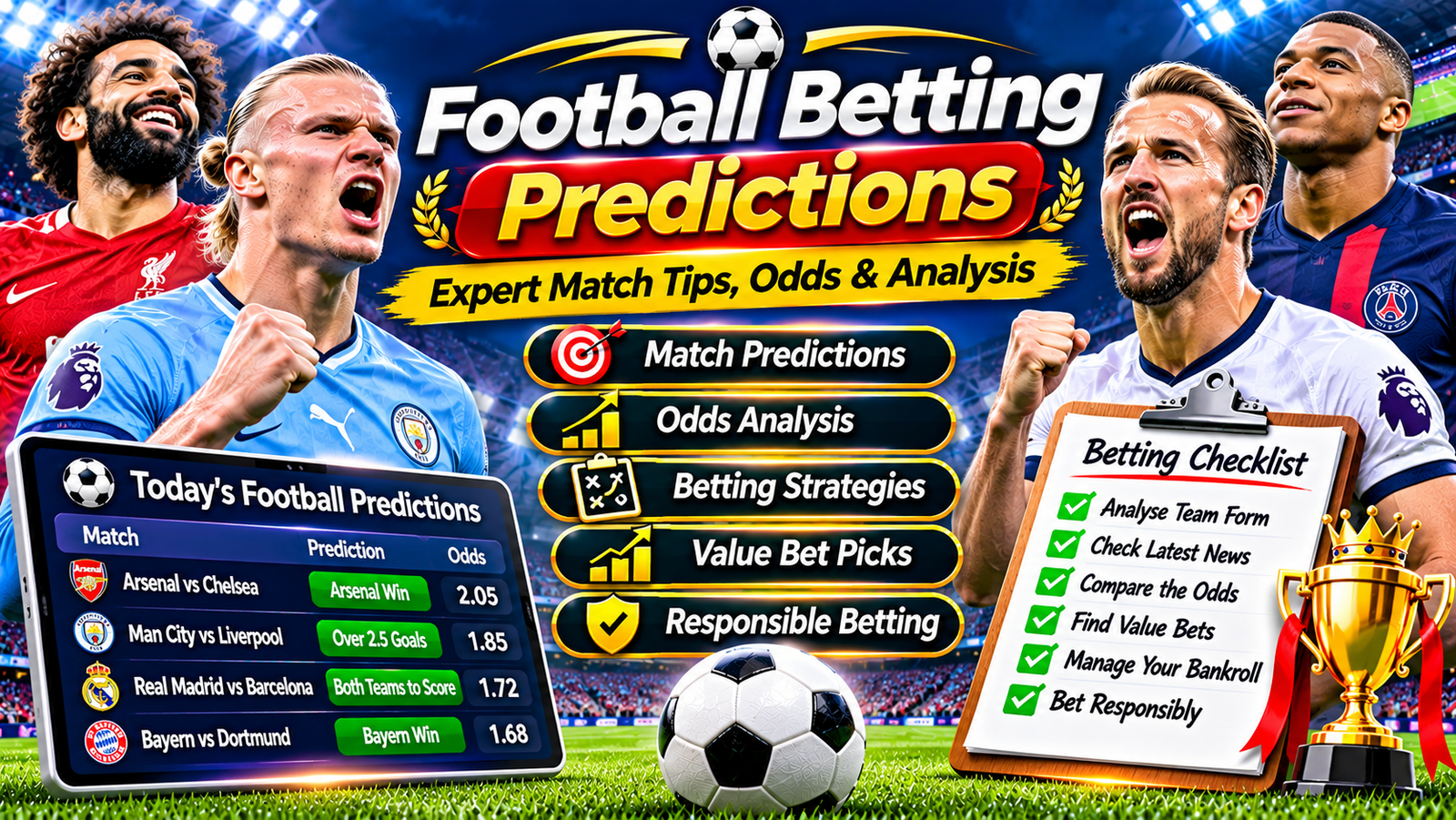
Why expert-led betting beats guessing
Football betting is full of noise, and most losing slips come from acting on incomplete information. Expert recommendations start with a clear match framework: playing style, squad availability, tactical matchup, and market behavior. Football Betting Predictions Instead of chasing hype, the approach focuses on what is most likely to happen within the game’s constraints. That means using form as a signal, not a verdict.
A strong recommendation also considers the betting market itself. Odds move for reasons—injury news, tactical changes, or public sentiment—so you should read the line like a story. When a price is out of sync with the underlying match logic, value can appear. The key is to separate justified steam from irrational movement by checking multiple indicators, not just social media buzz.
Match preview checklist for sharper predictions
Before selecting any bet, review the most actionable details that influence outcomes. Look at how both teams generate chances, not just how many they score. For example, a side that controls possession but struggles to break lines may underperform against a disciplined opponent. On the other hand, teams that transition quickly into the box often create higher-quality looks even if their overall shot totals are modest.
Next, evaluate matchup dynamics. Pay attention to how likely the underdog is to defend deep, because that affects whether goals are spread or concentrated early. Also consider set pieces: if one team wins corners consistently and has reliable aerial threats, goal markets can become more attractive.
Form, injuries, and tactical signals that move odds
Team form matters, but the most useful version is “process form”—how a team performs when you track shots, chances, and defensive structure. A club that has been unlucky in finishing may still produce the same quality chances, suggesting the market price could be too low. Conversely, a team winning through defensive luck might normalize and regress, especially if it faces an opponent with stronger shot creation. Treat each match as a test of underlying strengths rather than a replay of past results.
Injuries and suspensions are another major driver of recommendation quality. If a key creator is absent, you should expect fewer dangerous passes into the penalty area, which can reduce goal expectancy. If a defensive leader is out, the opponent may exploit space behind the back line, changing how safe certain bets feel. Even if the replacement player is competent, role adjustment can affect pressing intensity and defensive spacing, which can swing results in tight matches.
Best bet types: goals, totals, and safer ways to wager
Goal markets are often easier to model because they map to match events and chance volume. If both teams are likely to trade periods of pressure, a total goals range can outperform a one-dimensional winner bet. For instance, when one side attacks effectively but concedes transitions, “over” selections may carry more logic than betting a clean sheet. Alternatively, if one team dominates possession but struggles to finish, “under” or lower-range lines can match the game script.
Another angle is to look for “two-way” bets that reflect how the match can unfold. Instead of betting everything on a single outcome, consider markets like both teams to score in combination with the broader game plan. You can also use handicap styles to align your risk with the matchup—especially when one team is clearly stronger in chance creation but not guaranteed to control every phase. Reliable recommendations manage exposure by choosing lines that fit the tactical narrative rather than chasing the highest payout.
Conclusion
When you verify chance creation, defensive stability, and the impact of squad changes, your betting process becomes more consistent. That consistency is what helps you avoid emotional decisions that often lead to losses. Use the checklist approach to turn each preview into a structured decision. Finally, remember responsible betting principles. Set a budget, define limits before placing bets, and avoid chasing after setbacks. If a wager doesn’t fit the match logic you can explain in plain terms, it’s usually not a good bet. With disciplined evaluation and careful risk control, you can turn predictions into a smarter long-term strategy.